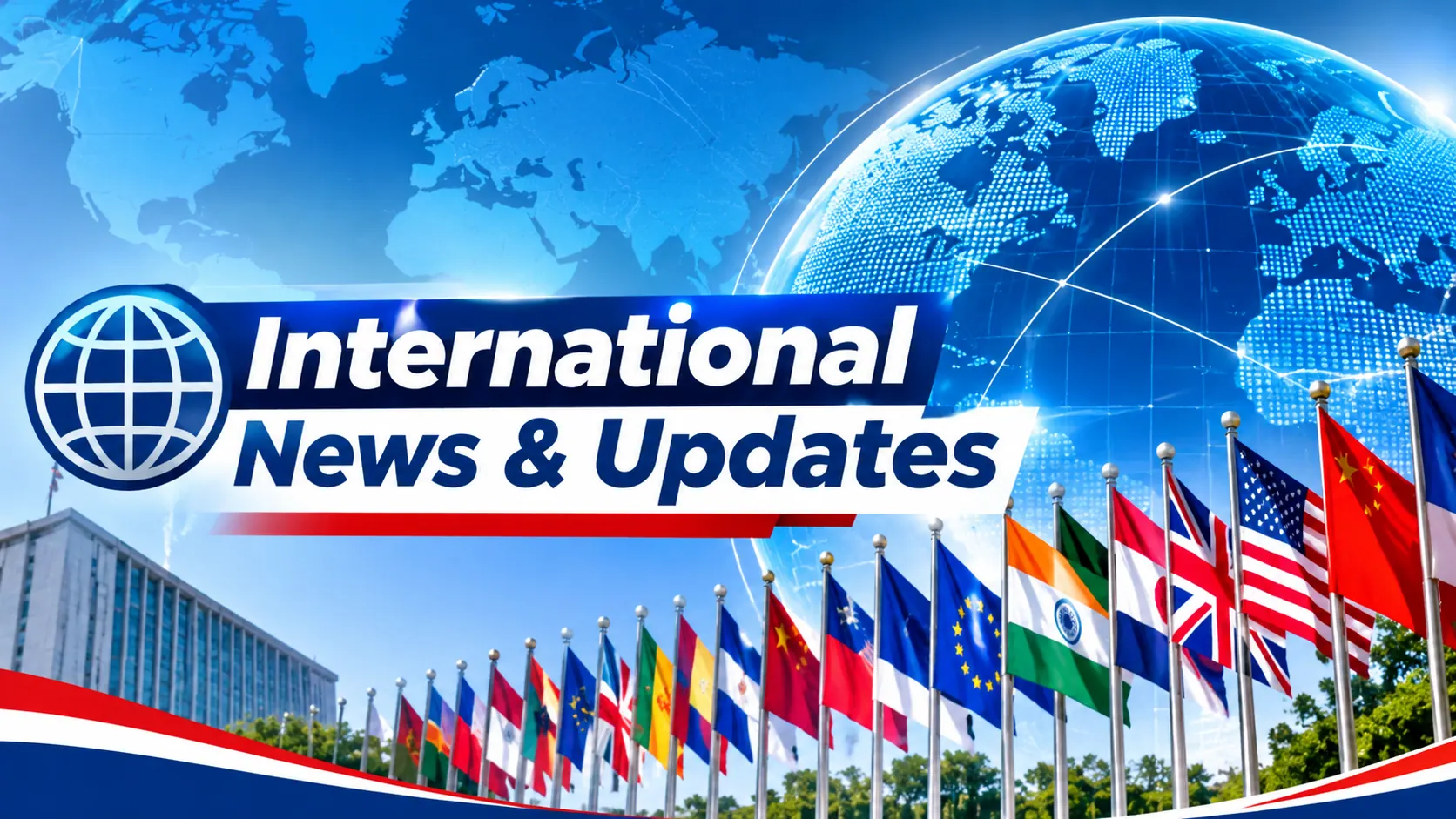
East Asia Summit 2026 Manila: Introduction
The 21st East Asia Summit (EAS) is scheduled to take place in Manila, Philippines, on 17 November 2026. The Philippines is hosting the summit as the ASEAN Chair for 2026. Prime Minister Narendra Modi is participating in the summit along with leaders of ASEAN member countries and other participating nations.
The East Asia Summit is an ASEAN-led leaders-level forum that provides a platform to discuss important political, strategic, economic and security issues affecting East Asia and the wider Indo-Pacific region.
For India, the summit is an important opportunity to engage with major regional partners, discuss shared challenges and strengthen cooperation on maritime security, regional stability, trade, connectivity and economic development.
What Is the East Asia Summit (EAS)?
The East Asia Summit is a regional forum established in 2005. It brings together leaders of ASEAN member states and participating countries to discuss strategic, political and economic matters of common interest.
The first East Asia Summit was held in Kuala Lumpur, Malaysia, on 14 December 2005. The forum was created to promote dialogue, cooperation, peace, stability and economic prosperity in East Asia.
Unlike a conventional trade agreement or military alliance, the EAS is primarily a platform for dialogue and cooperation. It allows participating leaders to exchange views on regional and international developments and identify areas for joint action.
East Asia Summit: Key Facts
| Particular | Details |
|---|---|
| Full Name | East Asia Summit |
| Abbreviation | EAS |
| Established | 2005 |
| First Summit | 14 December 2005 |
| First Venue | Kuala Lumpur, Malaysia |
| 21st Summit | 2026 |
| 2026 Host Country | Philippines |
| 2026 Host City | Manila |
| Scheduled Date | 17 November 2026 |
| Chair | Philippine ASEAN Chairmanship |
| Main Purpose | Strategic, political and economic dialogue |
| India | Founding participant |
Which Countries Participate in the East Asia Summit?
The East Asia Summit comprises 19 participating countries, including 11 ASEAN member states and eight other participating countries. These countries represent important economic, political and strategic partners across the Indo-Pacific region.
The United States and Russia joined the EAS framework at the sixth summit in 2011. Timor-Leste became an ASEAN member in October 2025, bringing the number of ASEAN members participating in the EAS to 11.
List of 19 EAS Participating Countries
| No. | Country | Group |
|---|---|---|
| 1 | Brunei Darussalam | ASEAN |
| 2 | Cambodia | ASEAN |
| 3 | Indonesia | ASEAN |
| 4 | Lao PDR | ASEAN |
| 5 | Malaysia | ASEAN |
| 6 | Myanmar | ASEAN |
| 7 | Philippines | ASEAN |
| 8 | Singapore | ASEAN |
| 9 | Thailand | ASEAN |
| 10 | Timor-Leste | ASEAN |
| 11 | Vietnam | ASEAN |
| 12 | Australia | Other EAS Participants |
| 13 | China | Other EAS Participants |
| 14 | India | Other EAS Participants |
| 15 | Japan | Other EAS Participants |
| 16 | New Zealand | Other EAS Participants |
| 17 | Republic of Korea | Other EAS Participants |
| 18 | Russia | Other EAS Participants |
| 19 | United States | Other EAS Participants |
Why Is the East Asia Summit Important?
The Indo-Pacific region has become increasingly important for global trade, maritime transport, technology, energy security and international relations. The East Asia Summit provides a platform where major regional powers can discuss these matters directly.
Its importance comes from the participation of ASEAN countries alongside India, China, Japan, the United States, Russia, Australia and other regional partners.
Main Objectives of EAS
- Promote peace and stability in East Asia and the Indo-Pacific.
- Encourage strategic dialogue among regional leaders.
- Strengthen political and security cooperation.
- Support economic integration, trade and investment.
- Improve maritime cooperation and regional connectivity.
- Address climate, energy, health and disaster management challenges.
- Promote sustainable development and people-to-people relations.
21st East Asia Summit 2026: Why Is Manila Hosting It?
The Philippines is serving as ASEAN Chair for 2026 and is therefore hosting the annual East Asia Summit process. Manila is the venue for the 21st EAS scheduled on 17 November 2026.
The ASEAN Chair plays an important role in setting the priorities of the summit in consultation with participating countries. The Philippines is hosting the meetings under its 2026 ASEAN Chairmanship theme, Navigating Our Future, Together.
The summit gives regional leaders an opportunity to discuss shared challenges, strengthen cooperation and exchange views on the future of the Indo-Pacific.
What Is India Agenda at the East Asia Summit 2026?
Prime Minister Narendra Modi is participating in the 21st East Asia Summit in Manila. In his official departure statement on 16 November 2026, he described the EAS as an important platform for dialogue on regional and global challenges.
The Prime Minister said that he looked forward to exchanging views with participating leaders on strengthening peace, stability and cooperation in the Indo-Pacific.
Based on the official statement and India engagement with the region, the following themes explain the broad Indian priorities associated with the summit. These are agenda areas, not a transcript of the Prime Minister speech or a list of confirmed summit decisions.
1. Peace and Stability in the Indo-Pacific
Peace and stability in the Indo-Pacific are central to India engagement with the East Asia Summit. The region includes important sea routes, economic centres and strategic partners.
India supports dialogue and cooperation among regional countries to address common challenges and maintain a peaceful, stable and open regional environment.
India Focus Areas
- Regional dialogue and diplomatic engagement.
- Peaceful resolution of disputes in accordance with international law.
- Regional stability and cooperation.
- Support for an open and inclusive Indo-Pacific.
2. Maritime Security and Safe Sea Routes
Maritime security is an important subject for India because the Indo-Pacific contains major international shipping and trade routes. India has strong economic and strategic interests in maintaining safe and secure maritime routes.
India and ASEAN have designated 2026 as the ASEAN-India Year of Maritime Cooperation. This initiative provides an additional framework for discussions on maritime safety, security, capacity building and regional cooperation.
Key Maritime Priorities
- Maritime safety and security.
- Information sharing and maritime domain awareness.
- Cooperation against piracy and illegal activities at sea.
- Humanitarian assistance and disaster relief.
- Capacity building and maritime connectivity.
3. Trade, Investment and Regional Economic Cooperation
Economic cooperation is another important area for India at the East Asia Summit. East Asia and Southeast Asia are connected to major global supply chains, manufacturing networks and international markets.
India aims to expand economic engagement with regional partners through trade, investment, connectivity and technology cooperation. Stronger regional economic links can create opportunities for Indian businesses, manufacturers and service providers.
Economic Cooperation Priorities
- Expanding trade and investment opportunities.
- Strengthening regional supply chains.
- Improving connectivity between India and Southeast Asia.
- Promoting technology and digital cooperation.
- Supporting economic resilience and sustainable growth.
4. Regional Security and Strategic Dialogue
The East Asia Summit is a leaders-led platform for discussing strategic and political issues. Participating countries can exchange views on regional security challenges, international developments and cooperation mechanisms.
For India, regular dialogue with ASEAN members and other major powers is important for building mutual understanding and addressing shared regional concerns.
Issues such as the situation in Myanmar, developments in the South China Sea and wider Indo-Pacific security concerns have featured in previous EAS discussions. Their inclusion in any specific 2026 outcome should be confirmed through the official summit statement.
5. Climate, Energy, Health and Sustainable Development
The EAS agenda is broader than traditional security and trade discussions. Its established areas of work include climate and environmental cooperation, energy security, public health, education, disaster management, food security and sustainable development.
These subjects are important for India and other participating countries because regional challenges such as natural disasters, climate change, public health emergencies and energy disruptions require cooperation across borders.
Important Areas
- Climate change and environmental protection.
- Energy cooperation and energy security.
- Public health and pandemic preparedness.
- Natural disaster management.
- Food security and sustainable development.
- Education and people-to-people exchanges.
East Asia Summit and ASEAN-India Summit: What Is the Difference?
The East Asia Summit and ASEAN-India Summit are two separate diplomatic platforms. Both involve India and ASEAN, but their participation and purpose are different.
| Feature | East Asia Summit | ASEAN-India Summit |
|---|---|---|
| Nature | Regional leaders-led forum | India and ASEAN leaders meeting |
| Participants | 19 participating countries | India and ASEAN member states |
| Main Focus | Regional and global strategic, political and economic issues | India-ASEAN partnership and cooperation |
| Established | 2005 | Summit-level dialogue began in 2002 |
| 2026 Venue | Manila, Philippines | Manila, Philippines |
| 2026 Date | 17 November 2026 | 17 November 2026 |
| India Role | Founding participant | Dialogue and strategic partner of ASEAN |
India and East Asia Summit: Historical Background
India was among the original participants of the first East Asia Summit held in Kuala Lumpur in December 2005. Its participation reflects the importance India attaches to Southeast Asia and the wider Indo-Pacific region.
India engagement with ASEAN has also expanded over several decades. The relationship has developed from dialogue and economic cooperation into a Comprehensive Strategic Partnership.
| Year | Important Development |
|---|---|
| 1992 | India became an ASEAN Sectoral Dialogue Partner. |
| 1995 | India became an ASEAN Dialogue Partner. |
| 2002 | India-ASEAN Summit-level partnership began. |
| 2005 | India participated in the first East Asia Summit. |
| 2012 | India-ASEAN relations were elevated to a Strategic Partnership. |
| 2022 | India and ASEAN established a Comprehensive Strategic Partnership. |
| 2026 | ASEAN-India Year of Maritime Cooperation. |
| 2027 | 35 years of Dialogue Relations and five years of Comprehensive Strategic Partnership. |
PM Modi Manila Visit 2026: Summit Schedule
| Date | Programme | Details |
|---|---|---|
| 16 November 2026 | Arrival in Manila | Official visit to the Philippines |
| 16 November 2026 | Indian Community Interaction | Meeting with members of the Indian diaspora |
| 16 November 2026 | Official Gala Dinner | Dinner hosted by Philippine President Ferdinand R. Marcos Jr. |
| 17 November 2026 | 23rd ASEAN-India Summit | Review of India-ASEAN partnership |
| 17 November 2026 | 21st East Asia Summit | Dialogue on regional and global challenges |
Any additional bilateral meetings or specific summit announcements should be added after confirmation through official government releases.
Why Is the East Asia Summit Important for India?
India has strong interests in the economic and strategic development of East Asia and Southeast Asia. The region is important for Indian trade, energy supplies, maritime connectivity and regional security.
The EAS allows India to engage with ASEAN members as well as other major regional powers in one leaders-level forum. This supports diplomatic communication and creates opportunities for cooperation on shared concerns.
The summit also complements India Act East Policy and its wider engagement with the Indo-Pacific.
Frequently Asked Questions
1. What is the East Asia Summit?
The East Asia Summit is an ASEAN-led leaders-level forum established in 2005 to discuss strategic, political and economic issues of regional and international importance.
2. When was the first East Asia Summit held?
The first EAS was held on 14 December 2005 in Kuala Lumpur, Malaysia.
3. Where will the 21st East Asia Summit 2026 be held?
The 21st East Asia Summit is scheduled to take place in Manila, Philippines, on 17 November 2026.
4. How many countries participate in the East Asia Summit?
The EAS has 19 participating countries, including 11 ASEAN member states and eight other participating countries.
5. Is India a member of the East Asia Summit?
Yes. India was among the original participants of the first East Asia Summit in 2005.
6. What is the main purpose of the East Asia Summit?
The main purpose is to provide a platform for dialogue and cooperation on strategic, political and economic issues, with the aim of promoting peace, stability and prosperity.
7. What is India agenda at the East Asia Summit 2026?
India agenda includes dialogue on Indo-Pacific peace and stability, maritime security, economic cooperation, regional connectivity and shared regional and global challenges.
8. Who is hosting the 21st East Asia Summit?
The Philippines is hosting the summit as the ASEAN Chair for 2026.
9. What is the difference between EAS and ASEAN-India Summit?
The EAS is a broader regional forum involving 19 participating countries. The ASEAN-India Summit is a separate meeting focused on cooperation between India and ASEAN member states.
10. Why is the East Asia Summit important for India?
It provides India with a leaders-level platform to engage regional powers on trade, maritime security, economic cooperation and Indo-Pacific stability.
Official Sources and References
- ASEAN – About the East Asia Summit
- ASEAN – EAS Participating Countries
- PM India – Departure Statement Ahead of Philippines Visit
- PIB – Prime Minister Departure Statement, 16 November 2026
- ASEAN – Chairman Statement of the 20th East Asia Summit
- Ministry of External Affairs, Government of India
Editorial Note: This article explains the East Asia Summit and the broad Indian priorities based on official information available before the 21st summit. The agenda areas should not be interpreted as confirmed outcomes or direct quotations from the summit proceedings. Final decisions and announcements should be updated after publication of the official 2026 Chairman Statement.


