MP Rajya Sabha By-Election 2026: How Will Voting Take Place? Complete Process
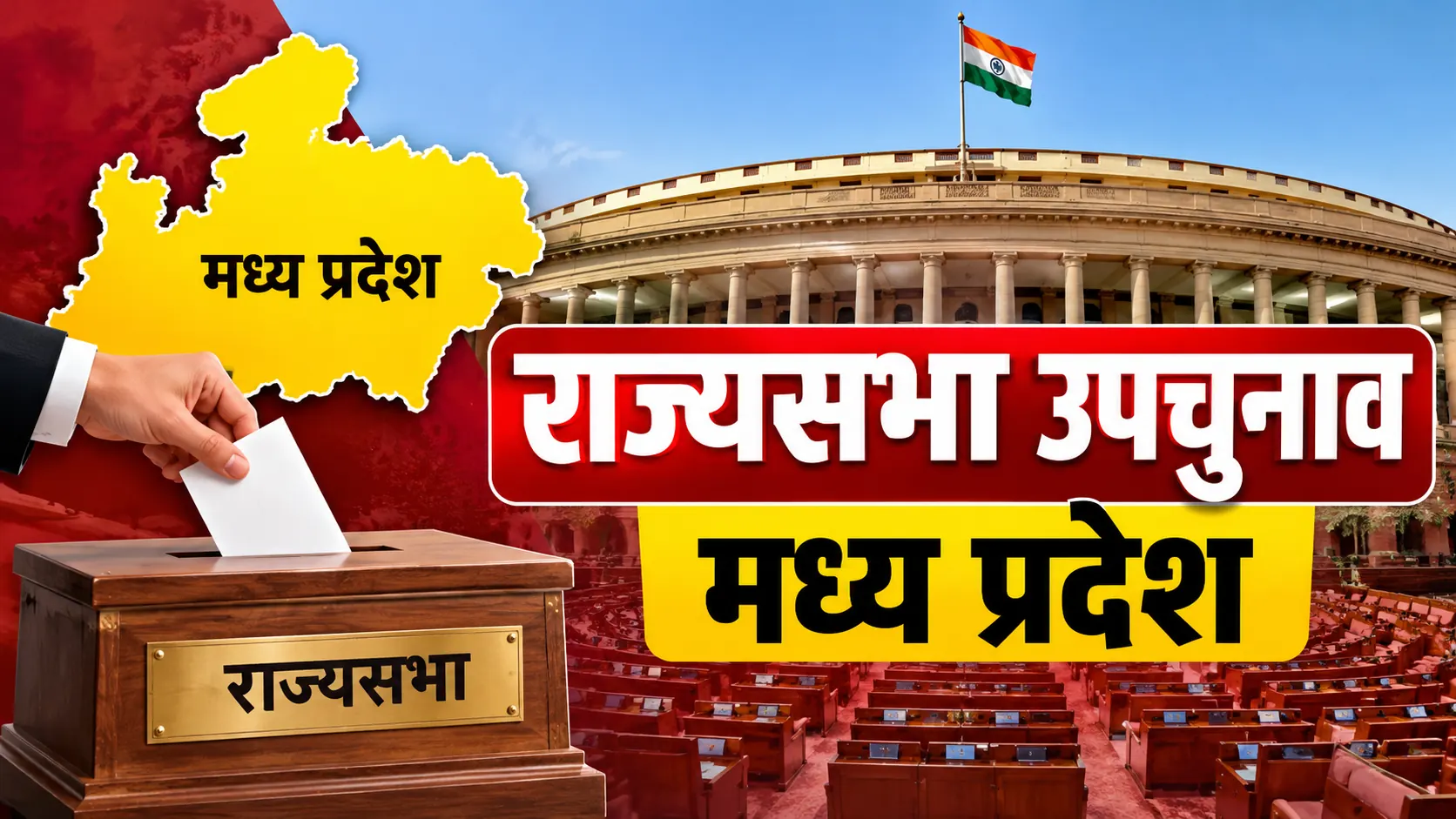
The Madhya Pradesh Rajya Sabha By-Election 2026 is scheduled for November 12, if polling is necessary. Unlike Lok Sabha and Assembly elections, the general public does not vote directly in a Rajya Sabha election. Eligible elected members of the Madhya Pradesh Legislative Assembly cast their votes to elect a representative to the Upper House of Parliament.
The election follows proportional representation by means of the single transferable vote. MLAs indicate their preferences for candidates on the ballot paper according to the prescribed rules. The Election Commission of India has also specified the use of the violet-coloured sketch pen supplied by the Returning Officer for marking preferences in this election.
MP Rajya Sabha Election 2026: Key Details
Polling date: November 12, 2026, if required.
Polling time: 9:00 AM to 4:00 PM.
Counting: Scheduled for 5:00 PM on the same day.
Eligible voters: Elected members of the Madhya Pradesh Legislative Assembly.
Voting system: Proportional representation by single transferable vote.
Prescribed pen: Violet-coloured sketch pen supplied by the Returning Officer.
MP Rajya Sabha By-Election 2026: Overview
| Election | Madhya Pradesh Rajya Sabha By-Election 2026 |
|---|---|
| Election Authority | Election Commission of India (ECI) |
| Vacant Seat | One Rajya Sabha seat from Madhya Pradesh |
| Polling Date | November 12, 2026, if necessary |
| Polling Hours | 9:00 AM to 4:00 PM |
| Counting Time | 5:00 PM on polling day |
| Voters | Eligible elected MLAs of Madhya Pradesh |
| Voting Method | Single transferable vote |
Who Can Vote in the MP Rajya Sabha By-Election?
Rajya Sabha members representing a state are elected by the elected members of that state's Legislative Assembly. Therefore, eligible elected MLAs of the Madhya Pradesh Legislative Assembly participate in this by-election.
Ordinary citizens do not cast direct votes in this election. The process is different from a general election, in which registered voters elect Lok Sabha members or state legislators from their constituencies.
- Eligible elected MLAs form the electorate for this state seat.
- The election fills one vacant Rajya Sabha seat from Madhya Pradesh.
- Voting takes place under the applicable parliamentary election rules.
- The final outcome depends on the valid votes and the prescribed counting procedure.
How Does the Rajya Sabha Voting Process Work?
Rajya Sabha elections use proportional representation by means of the single transferable vote. In this system, an MLA marks preferences for candidates instead of casting separate votes for each preference.
Step-by-Step Voting Process
- Reporting at the polling station: Eligible MLAs report to the designated polling location and follow the identity verification and voting instructions issued by election officials.
- Receiving the ballot paper: The elector receives the official ballot paper in accordance with the prescribed procedure.
- Checking candidate names: The MLA checks the names of the candidates printed on the ballot paper.
- Marking the first preference: The figure 1 is placed against the candidate who is the elector's first preference. This is compulsory for a valid vote.
- Marking additional preferences: The elector may mark 2, 3 and subsequent preferences against other candidates. Additional preferences are optional.
- Using the prescribed pen: Preferences must be marked with the violet-coloured sketch pen supplied by the Returning Officer, as directed for this election.
- Following ballot instructions: The elector must follow the official instructions for marking and handling the ballot paper.
- Depositing the ballot: The marked ballot is deposited as directed by the polling officials.
- Counting: Votes are counted according to the applicable election rules and the single transferable vote system.
The exact polling arrangements, ballot handling instructions and any additional safeguards must be followed as specified by the Returning Officer and Election Commission.
What Is the Single Transferable Vote System?
The single transferable vote system is a form of proportional representation. An elector marks candidates in order of preference, beginning with the first preference. The ballot is handled under the applicable counting rules so that preferences can be considered when required.
For a by-election involving one vacant Rajya Sabha seat, the prescribed quota and counting rules determine whether a candidate has received enough valid votes to be elected. The exact calculation depends on the valid votes and the applicable election rules.
| Preference | Meaning |
|---|---|
| 1 | First preference; compulsory for a valid ballot |
| 2 | Second preference; optional |
| 3 | Third preference; optional |
| Further numbers | Additional preferences, if the elector wishes to indicate them |
The figure 1 is essential. An elector does not need to mark every candidate, and additional preferences should be entered only in accordance with the ballot instructions.
Which Pen Must Be Used to Mark the Vote?
For the Madhya Pradesh Rajya Sabha by-election, the Election Commission has specified that preferences on the ballot paper must be marked using the violet-coloured sketch pen supplied by the Returning Officer. Other pens must not be used for this purpose.
Important Ballot Marking Rules
- Use the prescribed violet-coloured sketch pen supplied by the Returning Officer.
- Mark preferences with figures such as 1, 2 and 3, as applicable.
- The first preference must be marked for the ballot to be valid.
- Additional preferences are optional.
- Do not substitute another pen or ignore the official ballot instructions.
The use of the prescribed pen is an important procedural requirement. Electors should follow the current written instructions issued by the Returning Officer rather than relying on general assumptions about ballot marking.
What Can Make a Ballot Invalid?
A ballot paper must comply with the applicable election rules and official instructions. The first preference is compulsory, and the prescribed pen must be used for marking preferences in this election.
A ballot may be rejected if it fails to meet the relevant validity requirements. The precise grounds for rejection are governed by the applicable election rules and instructions, so a general checklist should not be treated as a substitute for those rules.
- Failure to mark a valid first preference can affect ballot validity.
- Using a pen other than the prescribed pen may violate the election instructions.
- Marking preferences incorrectly or contrary to ballot instructions may create a validity issue.
- Electors must follow the directions supplied with the ballot paper and by polling officials.
For the formal grounds on which a ballot may be rejected, consult the Conduct of Elections Rules and the instructions applicable to this election.
Is Rajya Sabha Voting Secret or an Open Ballot?
Rajya Sabha elections involving elected MLAs are conducted under the applicable open-ballot provisions. The rules include requirements concerning the display of a marked ballot to an authorised party representative for electors to whom that requirement applies.
The specific procedure depends on the election rules and the elector's circumstances. Electors must follow the instructions given by the Returning Officer and election officials. They should not assume that the procedure is identical to voting in a general public election.
For the legal requirements concerning ballot display, authorised representatives and the consequences of non-compliance, refer to the Representation of the People Act, 1951, the Conduct of Elections Rules, 1961 and the relevant Election Commission instructions.
When Will Counting Take Place?
Counting is scheduled for 5:00 PM on November 12, 2026, if polling takes place. The count is conducted according to the applicable rules governing the single transferable vote.
The election outcome is determined from the valid votes and the prescribed quota and counting procedure. The official result should be confirmed through the relevant election authorities.
If the contest does not require a poll under the applicable rules, the election process may conclude without polling. Readers should check official announcements after the nomination and withdrawal stages to establish the final status of the contest.
MP Rajya Sabha By-Election 2026: Important Dates
| Election Activity | Date |
|---|---|
| Election notification | 26 October 2026 |
| Last date for nominations | 2 November 2026 |
| Scrutiny of nominations | 3 November 2026 |
| Last date for withdrawal | 5 November 2026 |
| Polling, if necessary | 12 November 2026 |
| Polling hours | 9:00 AM to 4:00 PM |
| Counting, if polling takes place | 12 November 2026, from 5:00 PM |
| Election process completion deadline | Before 16 November 2026 |
Official Sources for Election Rules
For the latest polling instructions, official schedule, candidate information and result announcements, consult the Election Commission and the Madhya Pradesh Legislative Assembly.
Frequently Asked Questions
1. Who votes in the Madhya Pradesh Rajya Sabha by-election?
Eligible elected members of the Madhya Pradesh Legislative Assembly vote in the election. The general public does not vote directly.
2. How is a vote marked in a Rajya Sabha election?
The elector marks preferences using figures such as 1, 2 and 3 against candidates, following the prescribed ballot instructions. The first preference is compulsory.
3. Which pen must be used?
The prescribed violet-coloured sketch pen supplied by the Returning Officer must be used to mark preferences in this election.
4. Are additional preferences compulsory?
No. The first preference is compulsory, while additional preferences are optional under the applicable instructions.
5. What is the single transferable vote system?
It is a proportional representation system in which electors rank candidates by preference and votes are counted according to the applicable transfer and quota rules.
6. When will polling take place?
Polling is scheduled for November 12, 2026, from 9:00 AM to 4:00 PM, if a poll is necessary.
7. When will votes be counted?
Counting is scheduled for 5:00 PM on November 12, 2026, if polling takes place.
8. Is Rajya Sabha voting an open ballot?
Rajya Sabha elections involving elected MLAs follow the applicable open-ballot provisions. Electors must comply with the specific instructions issued by the Returning Officer.
9. Where can I check the official voting rules?
Refer to the Election Commission of India, the relevant election notification, the Representation of the People Act, 1951 and the Conduct of Elections Rules, 1961.
Disclaimer
This article provides general information about the Madhya Pradesh Rajya Sabha by-election voting procedure. The election is governed by the applicable constitutional provisions, election laws, rules and Election Commission instructions. Polling arrangements, ballot marking requirements and counting procedures must be verified through the latest official notification and the Returning Officer. The scheduled poll will take place only if required under the applicable rules.