Spain General Election 2026: Complete Guide to Dates, Candidates, and Key Issues
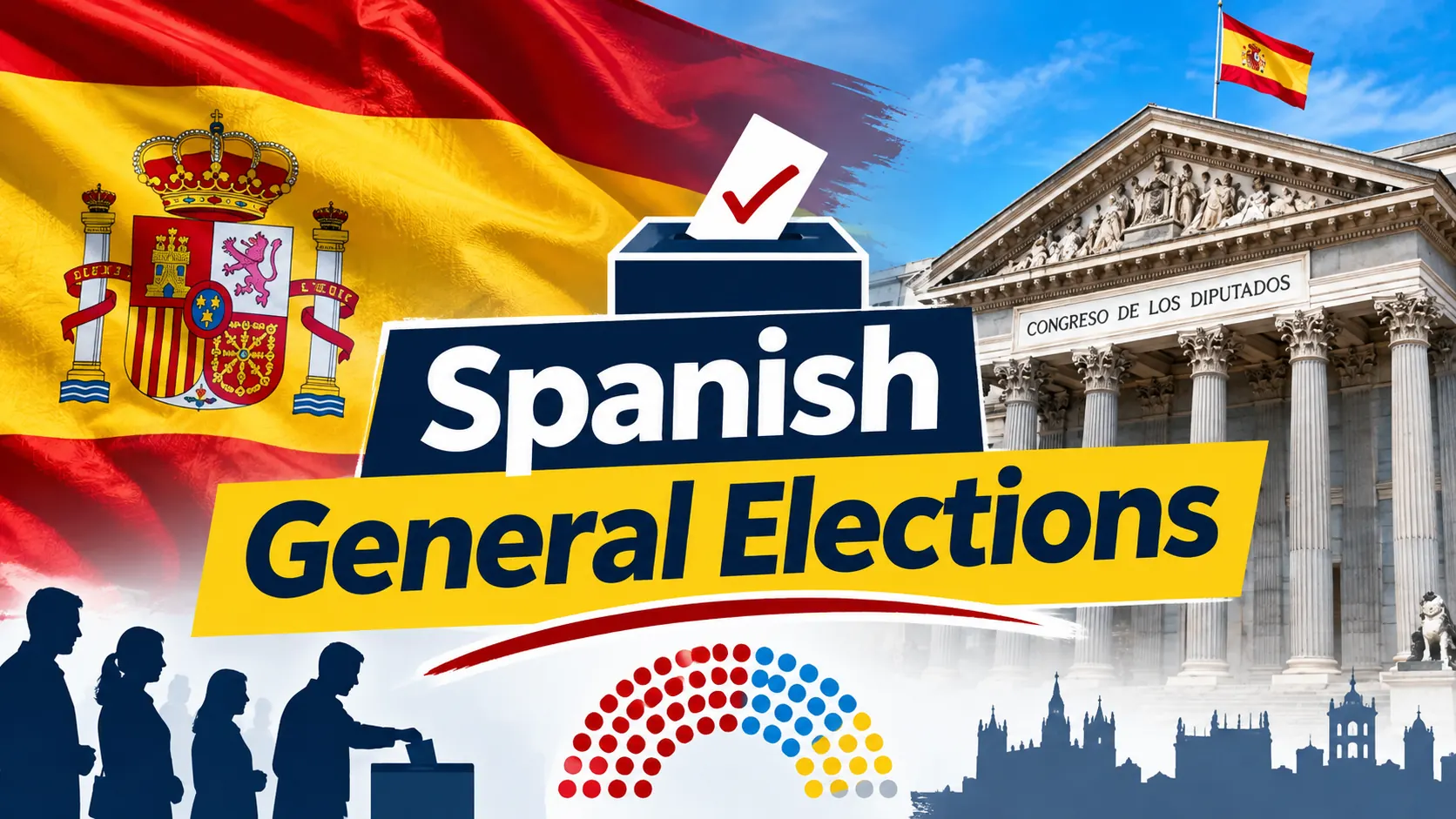
Spain is preparing for a snap General Election on Sunday, 29 November 2026. The election will determine the composition of the Congress of Deputies and the Senate, and could decide which political party or coalition forms the next national government. The election was called after the government lost parliamentary support for key housing-related measures and faced difficulties maintaining its legislative majority.
The 2026 Spanish General Election is an important political event for Spain and the European Union. Voters will decide between competing political approaches on housing, the economy, public services, immigration, national unity and government stability. The main political contest involves the Spanish Socialist Workers Party (PSOE), the People Party (PP), Vox and other national and regional political groups.
Spain General Election 2026: Key Details
| Election Detail | Information |
|---|---|
| Election Name | Spain General Election 2026 |
| Election Date | Sunday, 29 November 2026 |
| Election Type | Snap General Election |
| Country | Spain |
| Parliament | Cortes Generales |
| Lower House | Congress of Deputies |
| Congress Seats | 350 |
| Upper House | Senate |
| Elected Senate Seats | 208 |
| Majority Mark in Congress | 176 seats |
| Election Campaign | 13 November to 27 November 2026 |
| Election Day | 29 November 2026 |
| Constitutional Meeting of New Chambers | 23 December 2026 |
| Official Election Information | Spanish Ministry of Interior Election Portal |
When Is the Spain General Election 2026?
The Spanish General Election will take place on Sunday, 29 November 2026. The election was formally called through Royal Decree 806/2026, dated 5 October 2026, which dissolved the Congress of Deputies and Senate elected in July 2023 and scheduled elections for both chambers.
The official election campaign will run for 15 days. It begins at midnight on Friday, 13 November 2026, and ends at midnight on Friday, 27 November 2026. Saturday, 28 November, is the reflection day, followed by polling day on Sunday, 29 November.
Spain Election 2026 Important Dates
| Event | Date |
|---|---|
| Parliament Dissolution and Election Announcement | 5 October 2026 |
| Official Election Decree Published | 6 October 2026 |
| Candidate Lists Submission Period | 21–26 October 2026 |
| Candidate Lists Published | 28 October 2026 |
| Candidate Lists Officially Proclaimed | 2 November 2026 |
| Election Campaign Begins | 13 November 2026 |
| Election Campaign Ends | 27 November 2026 |
| Reflection Day | 28 November 2026 |
| Election Day | 29 November 2026 |
| New Parliament Constituted | 23 December 2026 |
Why Was the Spain General Election Called Early?
The snap election was called after Prime Minister Pedro Sánchez and his government faced growing difficulties maintaining parliamentary support. Housing affordability and rental market pressures became major political issues, while the government faced resistance to emergency measures related to housing and property speculation.
The parliamentary rejection of government housing measures in October 2026 contributed to the decision to dissolve Parliament and call an early election. The political situation also reflects disagreements among coalition partners and regional parties, making it increasingly difficult for the government to pass legislation.
The election will therefore determine not only which party receives the most votes, but also whether Spain can establish a stable parliamentary majority and form a functioning government.
Major Candidates and Political Leaders
Several major political leaders are expected to play a central role in the 2026 General Election campaign. The main national political competition is expected to involve the following parties and leaders.
| Political Party | Leader / Main Candidate | Political Position |
|---|---|---|
| Spanish Socialist Workers Party (PSOE) | Pedro Sánchez | Centre-left |
| People Party (PP) | Alberto Núñez Feijóo | Centre-right |
| Vox | Santiago Abascal | Right-wing |
| Frente Amplio | Ada Colau | Left-wing coalition |
| Podemos | Irene Montero | Left-wing |
| Republican Left of Catalonia (ERC) | Gabriel Rufián | Catalan pro-independence |
| Junts | Míriam Nogueras | Catalan pro-independence |
| Basque Nationalist Party (PNV) | Maribel Vaquero | Basque regionalist |
Candidate lists are presented separately for each electoral constituency. Voters should consult the official proclaimed candidate lists published through the Electoral Administration and the Official State Gazette for the candidates contesting their province.
Which Political Parties Are Contesting the Election?
1. Spanish Socialist Workers Party (PSOE)
The PSOE is the centre-left political party led by Prime Minister Pedro Sánchez. The party is expected to campaign on progressive policies, social protection, public services, economic growth and housing measures. Sánchez is seeking continued support for the Socialist political agenda and a new parliamentary mandate.
2. People Party (PP)
The People Party is the main centre-right opposition party led by Alberto Núñez Feijóo. Its campaign is expected to focus on economic policy, public administration, housing supply, taxation, government accountability and political change.
3. Vox
Vox is a right-wing political party led by Santiago Abascal. The party focuses on immigration policy, national unity, security, conservative social policies and reducing the influence of regional separatist parties.
4. Frente Amplio
Frente Amplio represents a left-wing coalition and is associated with parties and political groups connected to the broader progressive movement. Ada Colau is its leading candidate in the national political campaign. The coalition is expected to focus on housing affordability, social policies, climate-related measures and public services.
5. Podemos
Podemos remains an important political force on the left. Irene Montero is the party candidate and the campaign is expected to highlight social rights, housing, equality, workers rights and progressive economic policies.
6. Regional and Nationalist Parties
Regional parties may play an important role in determining parliamentary majorities. Parties such as ERC, Junts, PNV, EH Bildu, BNG, Coalición Canaria and other regional political groups compete in their respective territories and may influence coalition negotiations after the election.
Spain General Election 2026: Key Issues
Housing Crisis and Rental Prices
Housing affordability is expected to be one of the most important campaign issues. Rising rents, housing shortages, property prices, eviction concerns and access to affordable homes have become central political debates. Parties have different proposals regarding rent regulation, housing construction, land availability and protection for tenants.
Economy and Cost of Living
Economic growth, inflation, wages, employment, taxation and household purchasing power will remain major concerns for voters. Political parties are expected to present different plans for supporting businesses, workers, families and economic development.
Government Stability and Coalition Politics
Spain has experienced complex parliamentary negotiations and coalition arrangements in recent years. The 2026 election may determine whether a party can govern independently, whether a coalition is required or whether negotiations involving regional parties become necessary.
Immigration and Border Policy
Immigration, border management, asylum policy and integration are expected to feature prominently in political debates. Parties have different approaches regarding migration policy, border security and the responsibilities of national and European institutions.
Public Services
Healthcare, education, pensions, social security and public investment remain important issues for voters. The election campaign is expected to include debates about funding, service quality, government spending and reforms to public institutions.
National Unity and Regional Autonomy
Spain political structure includes autonomous communities with significant regional powers. Questions involving Catalonia, Basque politics, regional identity, decentralisation and national unity may influence party negotiations and government formation.
Climate and Energy Policy
Climate change, renewable energy, electricity costs, environmental protection and agricultural concerns are also important policy areas. Parties may offer different approaches to energy transition, environmental regulations and economic impacts.
How Many Seats Are Being Contested?
The Congress of Deputies has 350 members. The election uses provincial constituencies, with the number of deputies allocated to each province according to the electoral system and population distribution. Ceuta and Melilla each elect one deputy.
The Senate is also part of the Cortes Generales. In the 2026 election, 208 senators will be elected directly through the electoral system. Additional senators are appointed by the autonomous communities, making the total composition of the Senate larger than the directly elected number.
What Is the Majority Mark in Spain?
The Congress of Deputies has 350 seats. A party or coalition needs at least 176 seats to achieve an absolute majority in the Congress. However, Spain uses a parliamentary system, and a candidate for Prime Minister may seek an investiture vote with support or abstentions from other political groups.
Therefore, the party winning the largest number of seats does not automatically guarantee that it will form the government. Parliamentary negotiations, coalition agreements and investiture votes will determine the next Prime Minister.
How Does the Spain General Election Work?
Spanish voters elect representatives to the Congress of Deputies and the Senate. The Congress is elected through a proportional representation system based on provincial constituencies. Political parties submit candidate lists in each constituency, and seats are allocated according to the votes received under the applicable electoral rules.
The Senate election uses a different voting system. Voters directly elect senators in provincial and island constituencies, while autonomous communities also appoint senators according to constitutional rules.
Who Can Vote in the Spain General Election 2026?
Spanish citizens who meet the legal voting requirements can participate in the General Election. The official electoral census includes voters residing in Spain and eligible Spanish citizens living abroad.
According to the official information published for the 2026 election, approximately 38.7 million electors are eligible to vote, including residents in Spain and Spanish citizens registered abroad. Voters should check their electoral registration, polling station and voting information through the official election authorities.
Where to Check Spain Election Results 2026?
Official election results, constituency information, candidate lists, election schedules and voting information should be checked through government sources.
- Official Election Information Portal – Spanish Ministry of Interior
- Official State Gazette (BOE)
- National Statistics Institute (INE)
- Government of Spain – La Moncloa
Frequently Asked Questions
When is the Spain General Election 2026?
The Spanish General Election will be held on Sunday, 29 November 2026.
Why is Spain holding a snap election?
The election was called following parliamentary difficulties and the rejection of key government measures, particularly related to housing, alongside challenges in maintaining the government majority.
Who are the main candidates in the Spain General Election?
The main national political leaders include Pedro Sánchez for PSOE, Alberto Núñez Feijóo for PP and Santiago Abascal for Vox. Other political groups and regional parties are also contesting the election.
How many seats are in the Spanish Congress?
The Congress of Deputies has 350 seats.
What is the majority mark in Spain?
The absolute majority mark in the 350-seat Congress is 176 seats.
When does the election campaign begin?
The official campaign begins on 13 November 2026 and ends on 27 November 2026.
When will the new Spanish Parliament meet?
The new Congress of Deputies and Senate are scheduled to meet for their constitutive sessions on 23 December 2026.
What are the main issues in the election?
Housing, the economy, cost of living, government stability, immigration, public services, national unity, regional autonomy and climate policy are among the important topics expected to shape the campaign.
Where can I check official Spain election information?
Election information is available through the Spanish Ministry of Interior election portal, the Official State Gazette, the National Statistics Institute and the Government of Spain website.
Disclaimer: Election information, candidate details, political developments and campaign issues may change during the election period. Constituency-level candidate lists and official results should be verified through the Spanish Electoral Administration and official government sources.